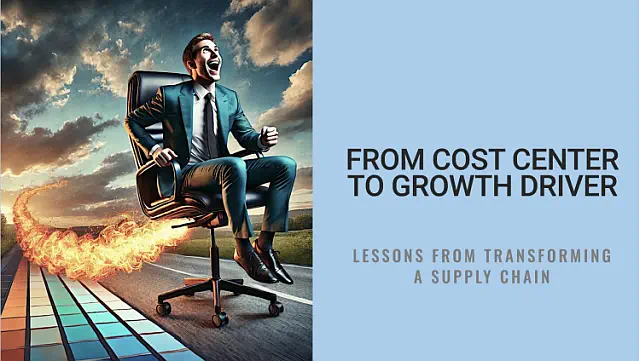
What happens when your supply chain becomes a liability instead of an asset? For many businesses, the answer lies not in cutting costs but in rethinking priorities. In today’s business environment, supply chains are not just about efficiency—they’re key to customer satisfaction and competitive advantage. Yet, many organizations struggle to balance costs, customer needs, and agility. My experience in transforming a struggling supply chain into a driver of growth offers lessons that are highly relevant today.
A Familiar Challenge
During my time as a global supply chain executive, I faced a major challenge: supply chain costs were growing at double-digit rates, outpacing revenue growth, while customer satisfaction was declining. Despite significant efforts to manage costs through traditional methods—tightening budgets, optimizing processes, and managing inventory—the results weren’t there. The harder we tried, the more elusive success seemed. To make matters worse, our most profitable customers were often the least satisfied.
This situation is more common than many realize. Increasing complexity in global supply chains, rising cost pressures, and the need for speed often lead to inefficiencies and missed opportunities. Our team discovered that following traditional approaches wasn’t addressing the core problem. The supply chain had become margin-dilutive, and customer relationships were under strain. It was clear we needed a completely different approach.
The Turning Point
The breakthrough came when we shifted focus from internal metrics to customer needs. By collaborating with the Commercial team, we took a closer look at our customer base. What we found was eye-opening: treating all customers the same wasn’t just ineffective—it was counterproductive.
Not all customers value the same things. Some needed premium, next-day delivery services, while others prioritized lower costs over speed. Recognizing these differences prompted a critical change: segmenting our customer base and adjusting our supply chain services to meet their specific needs.
Implementing segmentation wasn’t easy. Many stakeholders were resistant to moving away from the “one-size-fits-all” approach. We had to redefine service levels, deeply analyze customer behavior, and run pilot projects to demonstrate the impact of these changes. Over time, the results spoke for themselves, and more people within the organization embraced the new approach.
For example, we transitioned 80% of small package deliveries to standard economy services, reserving premium next-day delivery for customers with critical business needs or those who truly valued it. This wasn’t about cutting corners; it was about providing the right service to the right customer.
Transformative Results
The results were significant:
- Cost alignment: Supply chain cost growth was reduced to 30-40% of revenue growth rates.
- Customer satisfaction: Scores improved by 30%.
The impact extended far beyond the supply chain. Aligning operations with customer segmentation insights influenced the company’s broader Go-To-Market strategy. What started as a supply chain issue became a company-wide driver of growth.
This change didn’t just improve efficiency; it strengthened collaboration between supply chain and commercial teams. It created a culture of customer-first thinking that spread across the organization, affecting sales strategies and even product development.
Key Takeaways for Leaders
This experience reinforced a key lesson I bring to my work at Qwinn Business Partners: supply chains are not just about operations—they can drive business growth.
The secret lies in alignment. When supply chain capabilities are matched to customer needs and business goals, the results are tangible. This could mean better margins, higher customer satisfaction, or even standing out in the market. Leaders should focus on:
- Collaborating across teams: Supply chain transformations require input from sales, marketing, and finance to ensure solutions fit the broader strategy.
- Using data to segment customers: Deeply understanding what different customers value allows for tailored solutions.
- Clear communication: Ensure everyone understands the reasons behind changes and the benefits they bring.
- Starting small: Big changes often begin with small, practical steps. Running pilot projects builds momentum and confidence.
How Qwinn Business Partners Can Help
At Qwinn, we help businesses turn supply chains into drivers of growth. Whether it’s reducing lead times, cutting costs, or improving customer service, our solutions are always tailored to our clients’ unique needs.
We’ve faced these challenges ourselves and understand how complex they can be. One of our recent projects involved working with a global company where we aligned their supply chain with customer priorities and reduced costs by 20% while improving service levels. This wasn’t just an operational win—it became a competitive advantage that fueled their growth.
Conclusion
Every supply chain has a story. Is yours one of missed opportunities or strategic advantage? Rethinking priorities and aligning operations with what truly matters can make all the difference.
Let’s start a conversation. What are your biggest supply chain challenges? Share your thoughts, connect with us, or comment below—because transformation starts with the right dialogue.
If your supply chain feels like a bottleneck rather than a growth driver, let’s talk. At Qwinn Business Partners, we’re here to help you turn challenges into opportunities for long-term success.